Report an issue
Tell us what's wrong and we'll take a look.
Thanks – we got it. We'll review and follow up if needed.
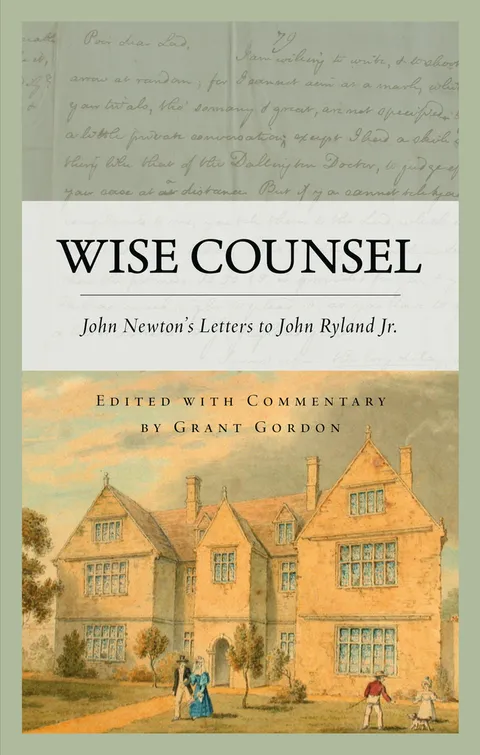
John Newton (1725-1807) has rightly been called 'the letter-writer par excellence of the Evangelical Revival'. Newton himself seems to have come to the conclusion, albeit reluctantly, that letter-writing was his greatest gift. In a letter to a friend he confessed, 'I rather reckoned upon doing more good by some of my other works than by my "Letters", which I wrote without study, or any public design; but the Lord said, "You shall be most useful by them," and I learned to say, 'Thy will be done! Use me as Thou pleasest, only make me useful."' Indeed, he wrote to his close friend William Bull that if the letters were 'owned to comfort the afflicted, to quicken the careless, to confirm the wavering, I may rejoice in the honour He has done me', and not envy the greatest writers of the age. All but ten of the letters in the present volume have been brought out of undeserved obscurity by Dr Grant Gordon, whose researches in libraries and archives, as well as in little-known nineteenth-century periodicals, have uncovered much material which is certainly calculated to comfort, quicken, and confirm. Those ten letters already in print can be found in the Banner of Truth Trust's four-volume edition of Newton's Works. Three of the ten are also in the Trust's Letters of John Newton, edited by Josiah Bull. The rest should be new to almost all readers. The particular recipient of Newton's 'wise counsel' in this book was John Ryland, Jr. (1753-1825), Baptist pastor and educator, and close friend of Andrew Fuller, William Carey, and all the pioneers of the modern missionary movement. But in the background stand all the major figures of the eighteenth-century Evangelical Revival. A list of Newton's friends and correspondents would, in fact, read like a 'who's who' of the Revival. And forming the wider background is a very eventful period of history, from the American Revolution to the French Revolutionary Wars, by way of the colonization of Australia, the first missions to India, and the abolition of the slave trade. Dr Gordon has helpfully set the letters in the context of these events and provided useful background detail. The reader will discover afresh in these letters, not only mature and wise counsel, but a wholesome emphasis on true Christian experience, a great breadth of Christian sympathy, and a strong confidence in the power of the grace of God, for, as Newton said, 'Grace has long and strong arms!' Re-typeset and updated, with two additional letters.
John Newton
John Newton (1725-1807) was born in London and at age eleven went to sea with his father, a shipmaster on the Mediterranean. Disregarding his mother's prayer that he enter the ministry, he engaged in the lucrative but brutal African slave trade for a number of years. After his conversion he served in the Church of England as pastor of Olney parish and later of the combined church of St. Mary's in London. In addition to the words of "Amazing Grace," Newton was a prolific songwriter whose other well-known hymns include "Glorious Things of Thee Are Spoken" and "How Sweet the Name of Jesus Sounds."
More by John Newton



Why Readwise Books?
Readwise Books is an ebook & audiobook platform that automatically logs how much you and your friends read, making it fun and easy to read more. Learn more →