Report an issue
Tell us what's wrong and we'll take a look.
Thanks – we got it. We'll review and follow up if needed.
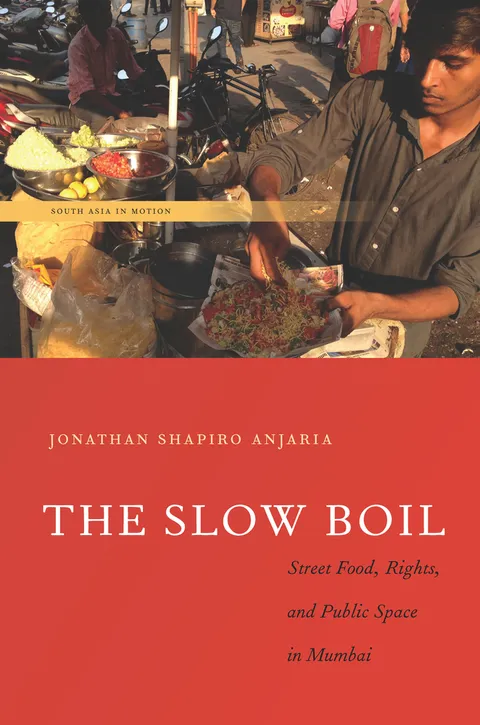
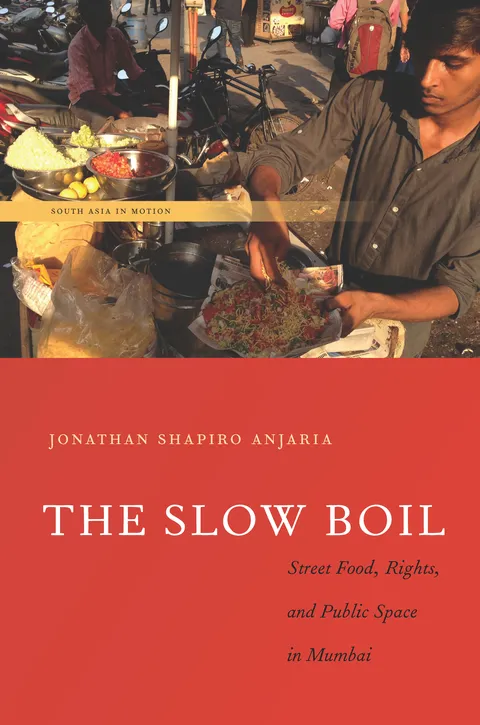
Street food vendors are both a symbol and a scourge of Mumbai: cheap roadside snacks are enjoyed by all, but the people who make them dance on a razor's edge of legality. While neighborhood associations want the vendors off cluttered sidewalks, many Mumbaikers appreciate the convenient bargains they offer. In The Slow Boil, Jonathan Shapiro Anjaria draws on his long-term fieldwork with these vendors to make sense of the paradoxes within the city and, thus, to create a better understanding of urban space in general.
Much urban studies literature paints street vendors either as oppressed and marginalized victims or as inventive premoderns. In contrast, Anjaria acknowledges that diverse political, economic, historic, and symbolic processes create contradictions in the vendors' everday lives, like their illegality and proximity to the state, and their insecurity and permanence. Mumbai's disorderly sidewalks reflect the simmering tensions over livelihood, democracy, and rights that are central to the city but have long been overlooked. In The Slow Boil, these issues are not subsumed into a larger framework, but are explored on their own terms.
Jonathan Shapiro Anjaria
Jonathan Shapiro Anjaria is associate professor of anthropology at Brandeis University. He is the author of The Slow Boil: Street Food, Rights, and Public Space in Mumbai (Stanford University Press, 2016); and coeditor of Urban Navigations: Politics, Space and the City in South Asia (Routledge, 2011).
More by Jonathan Shapiro Anjaria


Why Readwise Books?
Readwise Books is an ebook & audiobook platform that automatically logs how much you and your friends read, making it fun and easy to read more. Learn more →