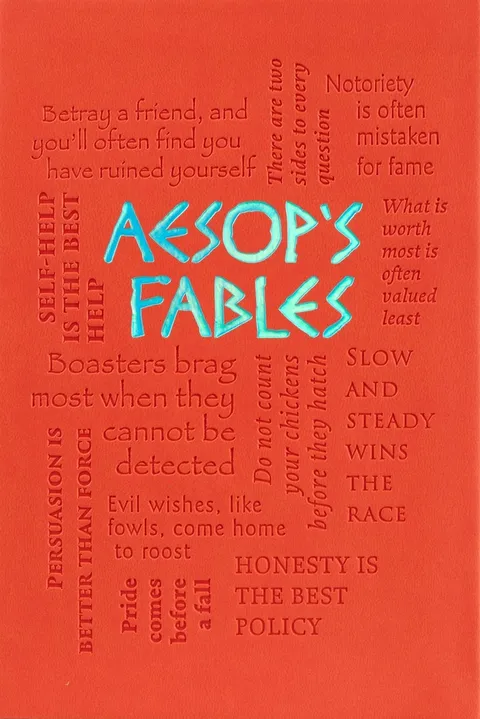
Aesop's Fables
Report an issue
Tell us what's wrong and we'll take a look.
Thanks – we got it. We'll review and follow up if needed.
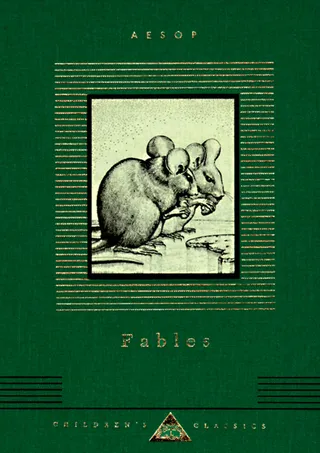
Aesop was a slave and storyteller who lived in ancient Greece around 620-564 BCE. No writings by him exist (if they ever existed at all), yet numerous stories and tales have been credited to him and have been shared through oral tradition throughout the world. Many of these use animals as the main characters to convey deeper meanings and morals that have become ingrained in our cultural--and personal--belief systems. For example, in "The Goatherd and the Goat," we learn that there is no use trying to hide what can't be hidden. In "The Ass and the Purchaser," we find that people are known by the company they keep. In "The Boys and the Frogs," one person's pleasure may be another person's pain. "The Dogs and the Fox" shows how easy it is to kick someone when they're down. And misery loves company, as we see in "The Fox Without a Tail." Featuring colorful sprayed edges and a heat-burnished cover with foil stamping, Aesop's Fables is a stylish collection of stories that have influenced thousands of other literary works.
Aesop
Aesop was a Greek fabulist and storyteller credited with a number of fables now collectively known as Aesop's Fables.
More by Aesop


Arthur Rackham
Translated by
Arthur Rackham (1867-1939) was a British illustrator.


Why Readwise Books?
Readwise Books is an ebook & audiobook platform that automatically logs how much you and your friends read, making it fun and easy to read more. Learn more →