Report an issue
Tell us what's wrong and we'll take a look.
Thanks – we got it. We'll review and follow up if needed.
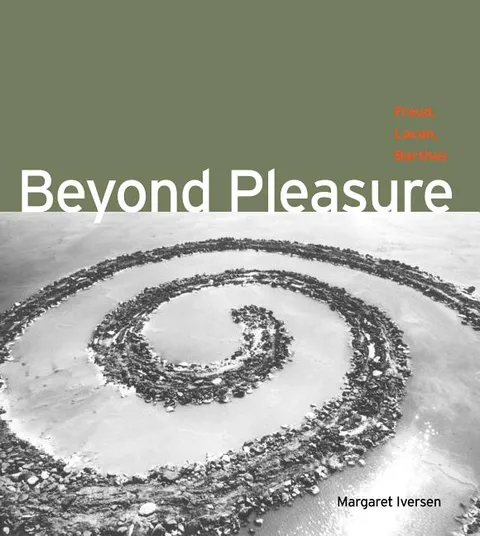
In Beyond the Pleasure Principle, Freud observed that the life-enhancing pleasure principle seems disrupted by something internal to the psyche. He took into account the possibility of a "death instinct" bent on returning the living organism to its origin of undifferentiated matter. In Beyond Pleasure: Freud, Lacan, Barthes, Margaret Iversen uses the writing of Freud, Lacan, the Surrealists, and Roland Barthes to elaborate a theory of art beyond the pleasure principle. Lacan was in close contact with the Surrealists and, early in his career, exchanged ideas with Dalí. This book offers a detailed reading of Dalí's "paranoiac-critical" tour de force, The Tragic Myth of Millet's Angelus, in which he demonstrates a method of interpretation that involves the projection and analysis of paranoid fantasies. The author later discusses the aesthetic dimension of the disintegrative death drive explored in Georges Bataille's Eroticism and in Anton Ehrenzweig's Hidden Order of Art, both of which inspired Robert Smithson. Iversen also takes up a postwar-era narrative that examines Maya Lin's Vietnam Veterans Memorial and Robert Smithson's Spiral Jetty. Beyond Pleasure shows that the aesthetics of Freud's theory continue to resonate in the contemporary art world.


Why Readwise Books?
Readwise Books is an ebook & audiobook platform that automatically logs how much you and your friends read, making it fun and easy to read more. Learn more →