Report an issue
Tell us what's wrong and we'll take a look.
Thanks – we got it. We'll review and follow up if needed.
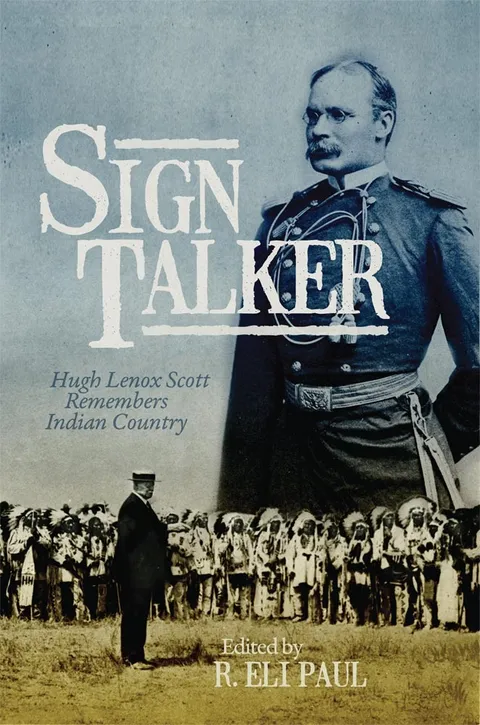
A graduate of West Point, General Hugh Lenox Scott (1853-1934) belonged to the same regiment as George Armstrong Custer. As a member of the Seventh Cavalry, Scott actually began his career at the Little Big Horn when in 1877 he helped rebury Custer's fallen soldiers. Yet Scott was no Custer. His lifelong aversion to violence in resolving disputes and abiding respect for American Indians earned him the reputation as one of the most adept peacemakers ever to serve in the U.S. Army. Sign Talker, an annotated edition of Scott's memoirs, gives new insight into this soldier-diplomat's experiences and accomplishments.
Scott's original autobiography, first published in 1928, has remained out of print for decades. In that memoir, he recounted the many phases of his distinguished military career, beginning with his education at West Point and ending with World War I, when, as army chief of staff, he gathered the U.S. forces that saw ultimate victory in Europe. Sign Talker reproduces the first--and arguably most compelling--portion of the memoir, including Scott's involvement with Plains Indians and his service at western forts. In his in-depth introduction to this volume, editor R. Eli Paul places Scott's autobiography in a larger historical context. According to Paul, Scott stood apart from his fellow officers because of his enlightened views and forward-looking actions. Through Scott's own words, we learn how he became an expert in Plains Indian Sign Language so that he could communicate directly with Indians and bypass intermediaries. Possessing deep empathy for the plight of Native peoples and concern for the wrongs they had suffered, he played an important role in helping them achieve small, yet significant victories in the aftermath of the brutal Indian wars.
As historians continue to debate the details of the Indian wars, and as we critically examine our nation's current foreign policy, the unique legacy of General Scott provides a model of military leadership. Sign Talker restores an undervalued diplomat to well-deserved prominence in the story of U.S.-Indian relations.


Why Readwise Books?
Readwise Books is an ebook & audiobook platform that automatically logs how much you and your friends read, making it fun and easy to read more. Learn more →