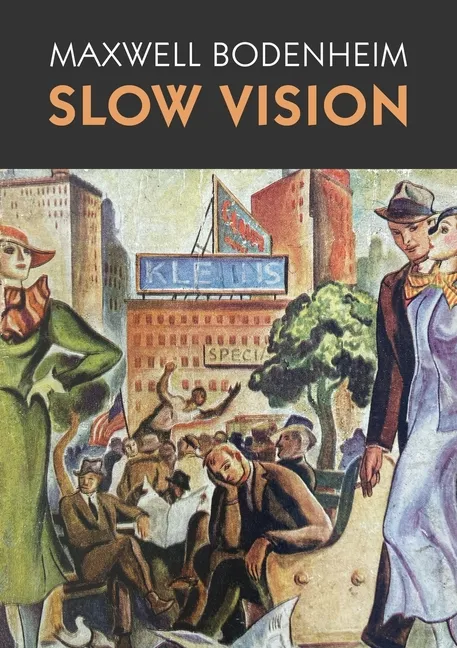
Slow Vision
Report an issue
Tell us what's wrong and we'll take a look.
Thanks – we got it. We'll review and follow up if needed.
Maxwell Bodenheim's 1934 novel Slow Vision depicts a young couple, a pair of average Americans swept up in labor struggles and reduced to painful subsistence, portraying the protagonists' gradual understanding of labor unions and the psychological, philosophical, and political trials that led to sympathetic affiliations in Socialism and Communism. Thus initiates their "slow vision," a simmering understanding of the manifestations of Leftist movements and of special relevance to the climate of the first two decades of the 21st century.
Bodenheim's books-thirteen novels and nine volumes of verse-are mostly out of print. Some were resurrected in the late-1940s through the mid-1950s as cheap pulp paperbacks after Bodenheim had lost the rights to his own work. Slow Vision was not one of them. Presumably, nobody wanted to be reminded of the Great Depression. Slow Vision would be Bodenheim's last published novel and literary history has forgotten it.
Maxwell Bodenheim
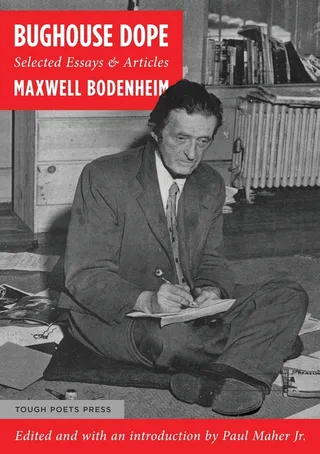
Maxwell Bodenheim was a literary figure associated with the bohemian and modernist movements in early 20th-century America. Known for a provocative and unconventional style, Bodenheim explored themes of alienation, sensuality, disillusionment, and the contradictions of urban life. His novels and poems often depicted characters who were marginalized or emotionally conflicted, situated within gritty urban environments like Chicago and New York. Bodenheim's writing captured the restless energy of the jazz age, using fractured narratives, lyrical language, and explorations of taboo subjects to reflect the anxieties and desires of the time. His work combined emotional intensity with social critique, often challenging the literary norms of his era. Many of his stories feature bohemian lifestyles, complex romantic entanglements, and bleak portrayals of human behavior, filtered through a sensibility that was both poetic and cynical. He was part of a generation seeking new artistic expression, and while his notoriety often eclipsed his literary merit, his contributions to American letters reveal a voice shaped by cultural upheaval, personal rebellion, and aesthetic daring. Bodenheim's legacy remains linked to the artistic ferment of the 1920s and to the gritty psychological realism that colored his portrayals of life on society's edges.
More by Maxwell Bodenheim






Why Readwise Books?
Readwise Books is an ebook & audiobook platform that automatically logs how much you and your friends read, making it fun and easy to read more. Learn more →