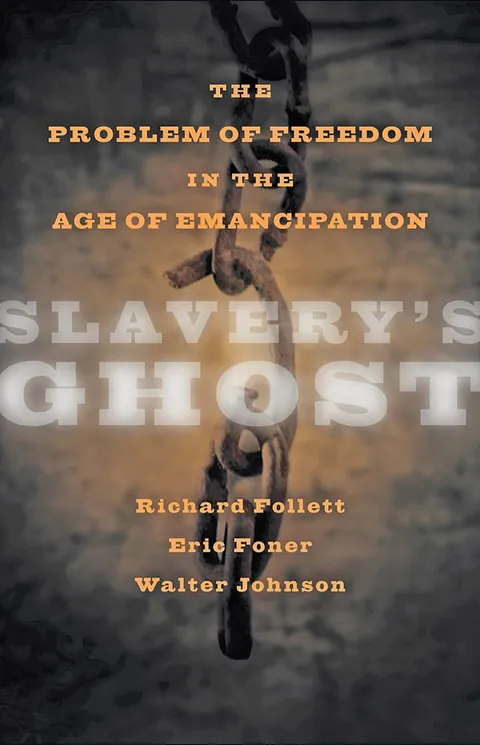
Slavery's Ghost
The Problem of Freedom in the Age of Emancipation
Report an issue
Tell us what's wrong and we'll take a look.
Thanks – we got it. We'll review and follow up if needed.
"Three thoughtful contributions . . . attempt to deepen and extend an emerging discussion about the limits to African American freedom and autonomy." —Slavery & Abolition President Abraham Lincoln freed millions of slaves in the South in 1863, rescuing them, as history tells us, from a brutal and inhuman existence and making the promise of freedom and equal rights. This is a moment to celebrate and honor, to be sure, but what of the darker, more troubling side of this story? Slavery's Ghost explores the dire, debilitating, sometimes crushing effects of slavery on race relations in American history. In three conceptually wide-ranging and provocative essays, the authors assess the meaning of freedom for enslaved and free Americans in the decades before and after the Civil War. They ask important and challenging questions: How did slaves and freedpeople respond to the promise and reality of emancipation? How committed were white southerners to the principle of racial subjugation? And in what ways can we best interpret the actions of enslaved and free Americans during slavery and Reconstruction? Collectively, these essays offer fresh approaches to questions of local political power, the determinants of individual choices, and the discourse that shaped and defined the history of black freedom. Written by three prominent historians of the period, Slavery's Ghost forces readers to think critically about the way we study the past, the depth of racial prejudice, and how African Americans won and lost their freedom in nineteenth-century America.
Eric Foner
Eric Foner is DeWitt Clinton Professor of History at Columbia University and the author of several books. In 2006 he received the Presidential Award for Outstanding Teaching at Columbia University. He has served as president of the Organization of American Historians, the American Historical Association, and the Society of American Historians. He lives in New York City.
More by Eric Foner



Walter Johnson
Walter Johnson is Winthrop Professor of History and professor of African and African American Studies at Harvard University. He is the author of River of Dark Dreams: Slavery and Empire in the Cotton Kingdom and, most recently, The Broken Heart of America: St. Louis and the Violent History of the United States.
More by Walter Johnson


Why Readwise Books?
Readwise Books is an ebook & audiobook platform that automatically logs how much you and your friends read, making it fun and easy to read more. Learn more →