Report an issue
Tell us what's wrong and we'll take a look.
Thanks – we got it. We'll review and follow up if needed.
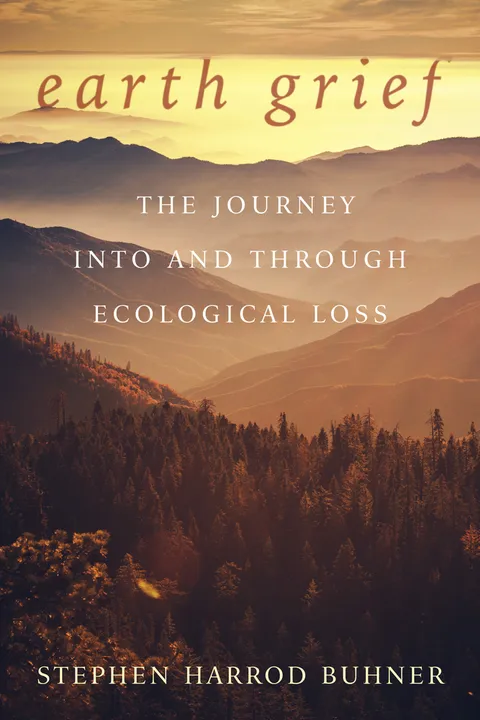
News reports appear every day now on the ecological state of our planetary home and the news is not good. Ecological systems are in terrible peril, species are dying by the millions, and global warming is getting worse. Increasing numbers of people feel the impact of this, feel some form of what is being called climate grief, ecological loss, or sometimes even solastalgia. Our species is entering a time of difficult and deep mourning. As environmentalist Leslie Head has said, "Grief will be our companion on this journey--it is not something we can deal with and move on." It will be with us for a long time to come.
Stephen Harrod Buhner takes the reader on a journey into and through that grief to what is waiting on the other side, a place that Viktor Frankl, Jacques Cousteau, Vaclav Havel, Elizabeth Kubler-Ross and so many others have found. It's where one becomes an engaged witness, alive to the losses that are occurring and the grief that is felt but is not overcome by them. Then he travels into and through the common feelings of guilt and shame (feelings that are put on so many but in actuality belong to very few) that come from ecological devastation. From there Stephen moves deep into what occurs when those we love die, when the planetary landscapes, forests, fields and rivers that are engraved into our deepest selves are lost, when we are forced to travel into the territory of death and loss and deep grief ourselves.
Throughout it, Stephen draws on his studies with Elizabeth Kubler Ross and others who worked with the dying, his years as a psychotherapist, extensive work with the chronically ill, and deep immersion in and relationship with plants, wild ecosystems, and this living planet that is our home. At journey's end what arises is not the optimism of false hope (as Greta Thunberg calls it) but a deeper and more realistic hope, one that is intimately entangled with gravitas and the journey through loss. It's born from the heart's integration of grief and a deep faith in the green world, in this planet from which we have emerged, and in the new life that comes with every spring.
Stephen's book is written with the exquisite prose style, intimacy, depth of insight, and engaged storytelling for which he is known. No one who reads it will remain unmoved or ever again feel as if they are alone in the grief they feel for what is happening to our home.
Stephen Harrod Buhner
Stephen Harrod Buhner (1952-2022) was an Earth poet and the award-winning author of many books on nature, indigenous cultures, the environment, and herbal medicine. He comes from a long line of healers including Leroy Burney, Surgeon General of the United States under Eisenhower and Kennedy, and Elizabeth Lusterheide, a midwife and herbalist who worked in rural Indiana in the early nineteenth century. The greatest influence on his work, however, was his great-grandfather C.G. Harrod who primarily used botanical medicines, also in rural Indiana, when he began his work as a physician in 1911.
Stephen's work has appeared or been profiled in publications throughout North America and Europe including Common Boundary, Apotheosis, Shaman's Drum, The New York Times, CNN, and Good Morning America. www.gaianstudies.org
More by Stephen Harrod Buhner





Why Readwise Books?
Readwise Books is an ebook & audiobook platform that automatically logs how much you and your friends read, making it fun and easy to read more. Learn more →