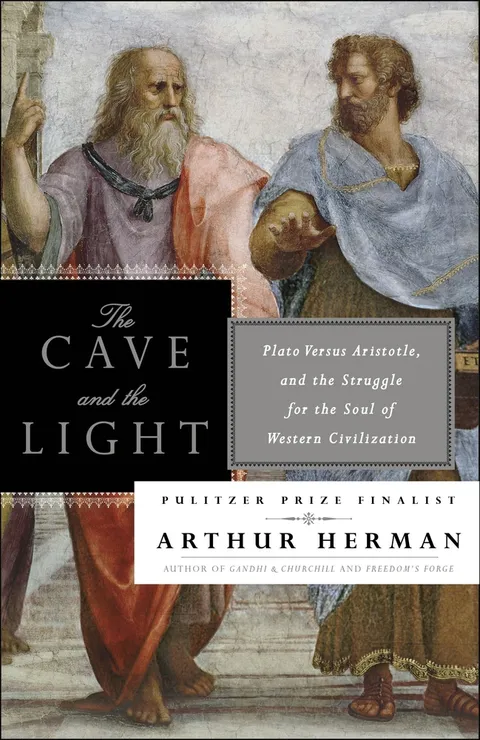
The Cave and the Light
Plato Versus Aristotle, and the Struggle for the Soul of Western Civilization
Report an issue
Tell us what's wrong and we'll take a look.
Thanks – we got it. We'll review and follow up if needed.
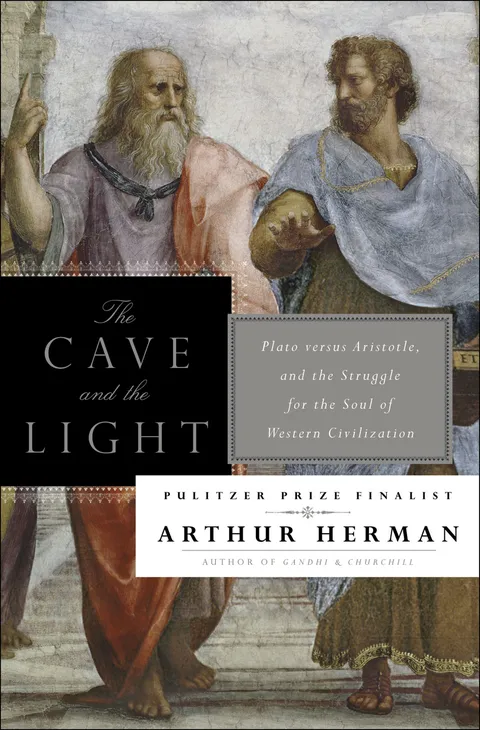
Plato came from a wealthy, connected Athenian family and lived a comfortable upper-class lifestyle until he met an odd little man named Socrates, who showed him a new world of ideas and ideals. Socrates taught Plato that a man must use reason to attain wisdom, and that the life of a lover of wisdom, a philosopher, was the pinnacle of achievement. Plato dedicated himself to living that ideal and went on to create a school, his famed Academy, to teach others the path to enlightenment through contemplation.
However, the same Academy that spread Plato's teachings also fostered his greatest rival. Born to a family of Greek physicians, Aristotle had learned early on the value of observation and hands-on experience. Rather than rely on pure contemplation, he insisted that the truest path to knowledge is through empirical discovery and exploration of the world around us. Aristotle, Plato's most brilliant pupil, thus settled on a philosophy very different from his instructor's and launched a rivalry with profound effects on Western culture.
The two men disagreed on the fundamental purpose of the philosophy. For Plato, the image of the cave summed up man's destined path, emerging from the darkness of material existence to the light of a higher and more spiritual truth. Aristotle thought otherwise. Instead of rising above mundane reality, he insisted, the philosopher's job is to explain how the real world works, and how we can find our place in it. Aristotle set up a school in Athens to rival Plato's Academy: the Lyceum. The competition that ensued between the two schools, and between Plato and Aristotle, set the world on an intellectual adventure that lasted through the Middle Ages and Renaissance and that still continues today.
From Martin Luther (who named Aristotle the third great enemy of true religion, after the devil and the Pope) to Karl Marx (whose utopian views rival Plato's), heroes and villains of history have been inspired and incensed by these two master philosophers--but never outside their influence.
Accessible, riveting, and eloquently written, The Cave and the Light provides a stunning new perspective on the Western world, certain to open eyes and stir debate.
Praise for The Cave and the Light
"A sweeping intellectual history viewed through two ancient Greek lenses . . . breezy and enthusiastic but resting on a sturdy rock of research."--Kirkus Reviews
"Examining mathematics, politics, theology, and architecture, the book demonstrates the continuing relevance of the ancient world."--Publishers Weekly
"A fabulous way to understand over two millennia of history, all in one book."--Library Journal
"Entertaining and often illuminating."--The Wall Street Journal
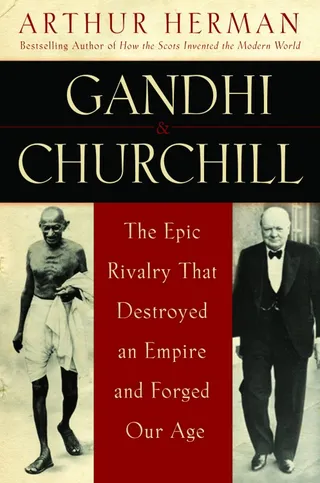
Arthur Herman
Arthur Herman is the author of How the Scots Invented the Modern World as well as The Idea of Decline in Western History and Joseph McCarthy. He has been a professor of history at Georgetown University, Catholic University, George Mason University, and the University of the South.
More by Arthur Herman





Why Readwise Books?
Readwise Books is an ebook & audiobook platform that automatically logs how much you and your friends read, making it fun and easy to read more. Learn more →