Ah Wilderness And Days Without End
Report an issue
Tell us what's wrong and we'll take a look.
Thanks – we got it. We'll review and follow up if needed.
Ah, Wilderness ! and Days Without End. Two Plays by Eugene O'Neill. Scenes: ACT ONE Sitting-room of the Miller home in a large small-town in Connecticut early morning, July 4th, 1906. ACT TWO Dining-room of the Miller home evening of the same day. ACT THREE Scene One: Back room of a bar in a small hotel 10 o'clock the same night. Scene Two: Same as Act One the sitting-room of the Miller home a little after 11 o'clock the same night. ACT FOUR Scene One: The Miller sitting-room again about 1 o'clock the following afternoon. Scene Two: A strip of beach along the harbour about 9 o'clock that night, Scene Three: Same as Scene One the sitting-room about 10 o'clock the same night CHARACTERS NAT MILLER, owner of the " Evening Globe " ESSIE, his wife MILDRED TOMMY SID DAVIS, Essie's brother LILY MILLER, Nat's sister DAVID McCoMBER MURIEL McCoMBER, daughter WINT SELBY, classmate of Arthurs at Yale BELLE NORAH BARTENDER SALESMAN ACT ONE SCENE. Sitting-room of the Miller home in a large small town in Connecticut about 7.30 in the morning of July 4th, 1906. The room is fairly large, homely looking and cheerful in the morning sunlight, furnished with scrupulous medium-priced tastelessness of the period. Beneath the two windows at left, front, a sofa with silk and satin cushions stands against the walL At rear of sofa, a bookcase with glass doors, fitted with cheap sets, extends along the remaining length of wall In the rear wall, left, is a double doorway with sliding doors andportieres, leading into a dark, windowless, lack parlour. At right of this doorway, another bookcase, this time a small, open one, crammed with boys and girls books and the best-setting novels of many past years books the family really have read. To the right of this book- case is the mate of the double doorway at its left, with sliding doors and portieres, this one leading to a well- lighted front parlour. In the right wall, rear, a screen door opens on a porch. Farther forward in this watt are two windows, with a writing-desk and a chair between them. At centre is a big, round table with a green-shaded reading-lamp, the cord of the lamp running up to one of five sockets in the chandelier above. Five chairs are grouped about the table three rockers at lefty right, and right rear of it, two armchairs at rear and left rear, A medium-priced, inoffensive rug covers........
Eugene O'Neill
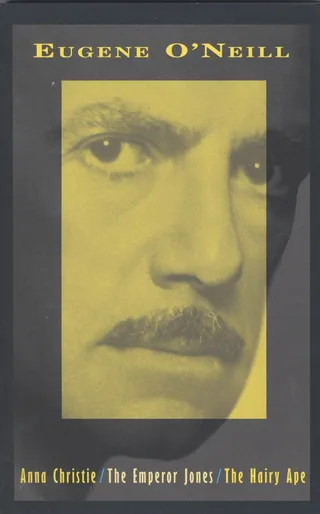
Eugene O'Neill was an American dramatist. His poetically themed plays were among the first in the United States to use realism drama techniques, which had previously been associated with Russian playwright Anton Chekhov, Norwegian playwright Henrik Ibsen, and Swedish playwright August Strindberg. The tragedy Long Day's Journey into Night, along with Tennessee Williams' A Streetcar Named Desire and Arthur Miller's Death of a Salesman, is frequently featured in lists of the best American plays of the twentieth century. He received the 1936 Nobel Prize in Literature. O'Neill is the only author to have won four Pulitzer Prizes for Drama. O'Neill's plays were among the first to feature talks in American English vernacular and characters from the margins of society. They try to retain their ambitions and objectives, but eventually succumb to disillusionment and despair. Only one of his few comedies has received widespread recognition. Almost all of his other plays contain some element of sorrow and personal pessimism. O'Neill was born on October 16, 1888, in the Barrett House hotel at Broadway and 43rd Street, in what was then Longacre Square (now Times Square), New York City. A commemorative plaque was first installed there in 1957. The location is presently filled by 1500 Broadway, which contains offices, retail, and the ABC Studios.
More by Eugene O'Neill





Why Readwise Books?
Readwise Books is an ebook & audiobook platform that automatically logs how much you and your friends read, making it fun and easy to read more. Learn more →